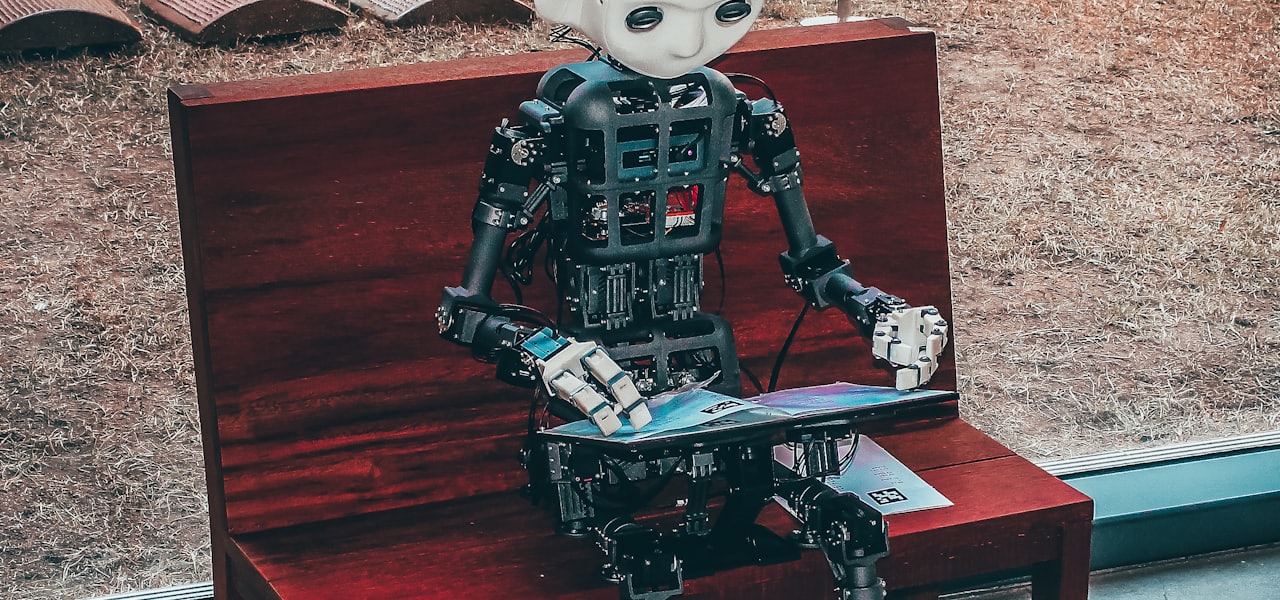
An AI data center is a specialized data center facility designed for the computationally intensive tasks of training and running inference for artificial intelligence (AI) and machine learning models. Unlike general-purpose data centers, they are optimized for the parallel processing demands of AI workloads, typically using hardware such as AI accelerators (e.g., GPUs, TPUs) and high-speed interconnects. The global push to construct these specialized facilities accelerated dramatically during the AI boom of the 2020s. Memory manufacturers prioritized production of High Bandwidth Memory (HBM) essential for AI servers, which led to a global memory supply shortage amid a broader competition for advanced chips, power, and infrastructure. Major tech companies are estimated to spend $650 billion on AI data centers in 2026. == Architecture == Data centers for building and running large machine learning models contain specialized computer chips, GPUs, that use 2 to 4 times as much energy as their regular CPU counterparts (250-500 watts). AI data centers use 60 or more kilowatts per server rack, whereas more standard data centers typically use 5 to 10 kilowatts per rack. == Operators == As of August 2025, The Information tracked 18 planned or existing AI data centers in the United States, operated by Amazon Web Services, CoreWeave, Crusoe, Meta, Microsoft/OpenAI, Oracle, Tesla, and xAI. Other AI data center operators include Digital Realty and Alibaba. Data centers are also being built in China, India, Europe, Saudi Arabia, and Canada. The New Yorker described CoreWeave as the most prominent AI data center operator in the United States. Two types of data center providers for machine learning have been noted: hyperscalers and neoclouds. The Verge listed large technology companies such as Google, Meta, Microsoft, Oracle and Amazon as hyperscalers. The New York Times described neoclouds as "a new generation of data center providers". CoreWeave, Nebius, Nscale, and Lambda have been described as examples of neoclouds. In January 2025, OpenAI, in partnership with Oracle and Softbank, announced the Stargate project, which as of September 2025 is composed of six built or proposed AI data centers in the United States. In response to the Stargate project, Amazon launched in October 2025 an AI data center on 1,200 acres of farmland in Indiana. This data center, known as Project Rainier, is one of the largest AI data centers in the world, with Amazon spending $11 billion on the project. Rainier is specifically intended for training and running machine learning models from Anthropic. As of that time, this facility contains seven data centers (out of an estimated 30 planned) and will use 2.2 gigawatts of electricity (equivalent to 1 million households) and millions of gallons of water per year. Computer chips from Annapurna Labs and Anthropic, Trainium 2, were designed for use in such facilities. Amazon pumped millions of gallons of water out of the ground to construct the data center, and as of June 2025, Indiana state officials are investigating whether this dewatering process led to dry wells for local residents. In November 2025, Anthropic announced a plan in partnership with Fluidstack to develop artificial intelligence infrastructure in the United States, including data centers in New York and Texas, worth $50 billion. Other AI data center projects include the Colossus supercomputer from xAI, a Louisiana-based project from Meta, Hyperion, expected to use 5 GW of power, and a second Ohio-based Meta project, Prometheus, with a capacity of 1 GW. A 3,200-acre AI data center, capable of 4.4-4.5 GW of power and located on the decommissioned Homer City Generating Station, is under construction as of 2025, and will use seven 30-acre gas generating stations supplied by EQT. As of December 2025, CRH is working on over 100 data centers in the United States. In 2025, ExxonMobil and NextEra announced plans to build a data center powered by natural gas and using carbon capture technology, with 1.2 GW of power capacity. They previously purchased 2,500 acres of land in the Southeastern United States and plan to market the data center to an artificial intelligence company. The increased interest in AI data centers has led to several executives from companies in that space becoming billionaires, including CoreWeave, QTS, Nebius, Astera Labs, Groq, Fermi (which is connected to former United States Secretary of Energy Rick Perry), Snowflake and Cipher Mining. Several companies involved in cryptocurrency mining, such as Bitdeer, CoreWeave, Cipher Mining, TeraWulf, IREN, Core Scientific, and CleanSpark have also been involved with AI data centers. == Finances == Between January and August 2024, Microsoft, Meta, Google and Amazon collectively spent $125 billion on AI data centers. Citigroup forecasted that $2.8 trillion would be spent on AI data centers by 2030, while McKinsey and Company estimated that almost $7 trillion would be spent globally by that time. According to S&P Global, $61 billion has been spent on the data center market as a whole in 2025, while debt issuance for data centers was $182 billion during the same year. Large technology companies have offloaded the financial risks of building AI data centers by setting up special purpose vehicles or by contracting with neoclouds. For example, Meta's Hyperion was mostly funded by Blue Owl Capital, which did so using a bond offering from PIMCO. Those bonds were sold to a number of clients, including BlackRock. Meta did not borrow money itself and instead established a special purpose vehicle from which it would rent the data center. This deal was structured by Morgan Stanley for $30 billion, the largest known private capital transaction as of 2025. Neoclouds such as CoreWeave have gone into debt to buy computer chips from Nvidia for their data centers, and the chips themselves have been used for loan collateral. As of December 2025, CoreWeave took out three GPU-backed loans, collectively worth $12.4 billion, from private credit firms (Blackstone, Coatue, BlackRock, PIMCO) and from banks (Goldman Sachs, JPMorgan Chase, Wells Fargo). Thus, these companies provide an indirect connection between private credit and established banks. Data centers have also established asset-backed securities, and debt for data centers has its own derivative financial products. The real estate industry, including asset managers, public companies and private investors, has also invested in data centers. == Energy sourcing == == Environmental footprint == Average AI data centers have an electricity footprint equivalent to 100,000 households, and use billions of gallons of water for cooling their hardware. In 2025, the International Energy Agency estimated that the larger AI data centers currently under construction could consume as much electricity as 2 million households. A 2024 report from the United States Department of Energy stated that data centers overall used 17 billion gallons of water per year in the United States, primarily due to "rapid proliferation of AI servers", and that this usage was forecasted to grow to nearly 80 billion gallons by 2028. Researchers estimated that AI data centers in the United States would emit 24-44 million metric tons of carbon dioxide and use 731–1,125 million cubic meters of water per year between 2024 and 2030. Peaking power plants, which have been proposed as a power source for AI data centers, emit sulfur dioxide and have historically been located disproportionately near communities of color in the United States. Reciprocating internal combustion engines, proposed as another power source for a data center, emit PM 2.5, nitrogen oxides, and volatile organic compounds. == AI data centers in the United States == In the United States, both the Biden administration and second Trump administration supported the construction of AI data centers. In January 2025, then-president Joe Biden signed an executive order for federal government agencies to support AI data centers on federal sites built by private companies, study their effect on energy prices, and encourage their use of renewable energy. In April 2025, the United States Department of Energy suggested 16 possible sites, including Los Alamos National Laboratory, Sandia National Laboratories and Oak Ridge National Laboratory. In its July 2025 AI Action Plan, the second Trump administration supported increased production of AI data centers. Several US states have incentivized local data center construction. For example, in 2024, lawmakers in Michigan approved tax breaks for data center equipment and construction material. Some data center companies have also invested or promised to invest in the infrastructure of local communities. In December 2025, Democratic senators Elizabeth Warren, Chris Van Hollen, and Richard Blumenthal wrote to seven technology companies (Google, Microsoft, Amazon, Meta, CoreWeave, Digital Realty, and Equinix) that they w
QF-Test
QF-Test from Quality First Software is a cross-platform software tool for automated testing of programs via the graphical user interface (GUI) test automation). The program is specialized on (Java/Swing, Standard Widget Toolkit (SWT), Eclipse plug-ins and rich client platform (RCP) applications, ULC and JavaFX) cross-web browser test automation of static and dynamic web applications (HTML and web frameworks like Angular, Ext JS, Fluent UI React, Google Web Toolkit (GWT), jQuery UI, jQueryEasyUI Remote Application Platform (RAP), Qooxdoo, RichFaces, Vaadin, React, Smart GWT, Vue.js, ICEfaces and ZK). Version 4.1 added support for macOS and the Apple Safari and Microsoft Edge browsers via the Selenium WebDriver. Representational State Transfer (RESTful) web service testing. From version 5.0, Windows applications can also be tested (classic Win32 applications, .NET framework applications (often developed in C#) based on Windows Presentation Foundation (WPF) or Windows Forms, Windows apps and Universal Windows Platform (UWP) applications using Extensible Application Markup Language (XAML) controls) and modern C++ applications (such as Qt applications). Version 5.3 added support for the Chrome DevTools protocol, which allows browsers to be controlled using CDP drivers. Since then, mobile testing for iOS and Android, accessibility testing of web applications and SmartID, a new approach for more flexible and robust component recognition, have been introduced. Powerful enhancements such as WebAPI testing and AI-assisted validation complement the test automation tool. == Overview == QF-Test (the successor of qftestJUI, available since 2001) enables regression and load testing and runs on Windows, Unix and macOS. It is mainly used commercially by testers, developers or business analysts (modelling, low code approaches) with or without programming knowledge as part of software Quality Assurance. Since December 2008, a webtest add-on is available which allows test automation of browser-based GUIs (such as Internet Explorer, Mozilla Firefox, Google Chrome, Apple Safari, and Microsoft Edge) along with extant Java GUI test functions, which was extended to include JavaFX in July 2014. From 2018, QF-Test version 4.2 can test PDF documents, from 2020 native desktop applications (QF-Test version 5) and in 2022, mobile application testing will be added. The basis for efficient use in test automation is stable component recognition (IDs, logical screen elements, labels, CustomWebResolver, SmartID, ...) with low maintenance effort. == Features == General – QF-Test's capture/replay function enables recording of tests for beginners, while modular programming (modularizing) allows creating large test suites in a concise arrangement. For the advanced user who requires even more control over his application, the tool offers access to internal program structures through the standard scripting languages Jython, the Java implementation of the popular Python language, JavaScript, and Groovy. The tool also offers a batch processing mode, allowing to run tests unattended and then generate XML, HTML and JUnit reports. Thus the tool can be integrated into existing build/test frameworks like Jenkins, Ant or Maven. Another mode is the so-called Daemon mode for distributed test execution. A specific integration with many test management tools exists. There is a test debugger (enabling arbitrary stepping and editing variables at runtime) and a fully automated dependency management that takes care of pre- and postconditions and helps isolating test cases. Data-driven testing with no need for scripting is possible. Web testing: cross-browser on Internet Explorer, Chrome, Firefox, Edge (including Chromium-based), Opera and Safari for static and dynamic websites (HTML5, Ajax, DOM). A headless browser can also be used for testing. QF-Test fully supports frameworks like Angular, React and Vue.js, but also many specific UI toolkits like Smart (GWT), GXT/ExtGWT, ExtJS, ICEfaces, jQuery UI, Kendo UI, PrimeFaces, Qooxdoo, RAP, RichFaces, Vaadin and ZK. Easy integration with Selenium makes it easy to balance development and functional testing. Electron applications can also be tested. Other (e.g., SAP UI5, Siebel Open UI, Salesforce) and future web toolkits can be integrated with little effort. Short-term and individual customisations (CustomWebResolver) are possible via an optimised interface JavaFX, Java Swing, SWT, Eclipse plug-ins and RCP applications and ULC. Support for testing when migrating from JavaSwing or JavaFX to web applications (e.g. via Webswing). Hybrid applications based on multiple technologies are also supported, e.g. applications that integrate HTML content into Java applications using JxBrowser. Windows-based applications (Win32, .NET, Windows Forms, WPF, Windows apps, Qt). Android applications can be tested on real devices and with the Android Studio emulator. iOS applications can also be tested on real devices and with the Xcode Simulator. Testing of PDF documents (document comparisons, checking content, texts, images/graphic objects, layouts, "invisible" or partially hidden objects). QF-Test 9 introduces web accessibility testing to automatically check compliance with WCAG and other standards. QF-Test 10 introduces powerful enhancements for WebAPI testing and AI-assisted validation.
Relationship square
In statistics, the relationship square is a graphical representation for use in the factorial analysis of a table individuals x variables. This representation completes classical representations provided by principal component analysis (PCA) or multiple correspondence analysis (MCA), namely those of individuals, of quantitative variables (correlation circle) and of the categories of qualitative variables (at the centroid of the individuals who possess them). It is especially important in factor analysis of mixed data (FAMD) and in multiple factor analysis (MFA). == Definition of relationship square in the MCA frame == The first interest of the relationship square is to represent the variables themselves, not their categories, which is all the more valuable as there are many variables. For this, we calculate for each qualitative variable j {\displaystyle j} and each factor F s {\displaystyle F_{s}} ( F s {\displaystyle F_{s}} , rank s {\displaystyle s} factor, is the vector of coordinates of the individuals along the axis of rank s {\displaystyle s} ; in PCA, F s {\displaystyle F_{s}} is called principal component of rank s {\displaystyle s} ), the square of the correlation ratio between the F s {\displaystyle F_{s}} and the variable j {\displaystyle j} , usually denoted : η 2 ( j , F s ) {\displaystyle \eta ^{2}(j,F_{s})} Thus, to each factorial plane, we can associate a representation of qualitative variables themselves. Their coordinates being between 0 and 1, the variables appear in the square having as vertices the points (0,0), ( 0,1), (1,0) and (1,1). == Example in MCA == Six individuals ( i 1 , … , i 6 ) {\displaystyle i_{1},\ldots ,i_{6})} are described by three variables ( q 1 , q 2 , q 3 ) {\displaystyle (q_{1},q_{2},q_{3})} having respectively 3, 2 and 3 categories. Example : the individual i 1 {\displaystyle i_{1}} possesses the category a {\displaystyle a} of q 1 {\displaystyle q_{1}} , d {\displaystyle d} of q 2 {\displaystyle q_{2}} and f {\displaystyle f} of q 3 {\displaystyle q_{3}} . Applied to these data, the MCA function included in the R Package FactoMineR provides to the classical graph in Figure 1. The relationship square (Figure 2) makes easier the reading of the classic factorial plane. It indicates that: The first factor is related to the three variables but especially q 3 {\displaystyle q_{3}} (which have a very high coordinate along the first axis) and then q 2 {\displaystyle q_{2}} . The second factor is related only to q 1 {\displaystyle q_{1}} and q 3 {\displaystyle q_{3}} (and not to q 2 {\displaystyle q_{2}} which has a coordinate along axis 2 equal to 0) and that in a strong and equal manner. All this is visible on the classic graphic but not so clearly. The role of the relationship square is first to assist in reading a conventional graphic. This is precious when the variables are numerous and possess numerous coordinates. == Extensions == This representation may be supplemented with those of quantitative variables, the coordinates of the latter being the square of correlation coefficients (and not of correlation ratios). Thus, the second advantage of the relationship square lies in the ability to represent simultaneously quantitative and qualitative variables. The relationship square can be constructed from any factorial analysis of a table individuals x variables. In particular, it is (or should be) used systematically: in multiple correspondences analysis (MCA); in principal components analysis (PCA) when there are many supplementary variables; in factor analysis of mixed data (FAMD). An extension of this graphic to groups of variables (how to represent a group of variables by a single point ?) is used in Multiple Factor Analysis (MFA) == History == The idea of representing the qualitative variables themselves by a point (and not the categories) is due to Brigitte Escofier. The graphic as it is used now has been introduced by Brigitte Escofier and Jérôme Pagès in the framework of multiple factor analysis == Conclusion == In MCA, the relationship square provides a synthetic view of the connections between mixed variables, all the more valuable as there are many variables having many categories. This representation iscan be useful in any factorial analysis when there are numerous mixed variables, active and/or supplementary.
Local tangent space alignment
Local tangent space alignment (LTSA) is a method for manifold learning, which can efficiently learn a nonlinear embedding into low-dimensional coordinates from high-dimensional data, and can also reconstruct high-dimensional coordinates from embedding coordinates. It is based on the intuition that when a manifold is correctly unfolded, all of the tangent hyperplanes to the manifold will become aligned. It begins by computing the k-nearest neighbors of every point. It computes the tangent space at every point by computing the d-first principal components in each local neighborhood. It then optimizes to find an embedding that aligns the tangent spaces, but it ignores the label information conveyed by data samples, and thus can not be used for classification directly.
Vanishing gradient problem
In machine learning, the vanishing gradient problem is the problem of greatly diverging gradient magnitudes between earlier and later layers encountered when training neural networks with backpropagation. In such methods, neural network weights are updated proportional to their partial derivative of the loss function. As the number of forward propagation steps in a network increases, for instance due to greater network depth, the gradients of earlier weights are calculated with increasingly many multiplications. These multiplications shrink the gradient magnitude. Consequently, the gradients of earlier weights will be exponentially smaller than the gradients of later weights. This difference in gradient magnitude might introduce instability in the training process, slow it, or halt it entirely. For instance, consider the hyperbolic tangent activation function. The gradients of this function are in range [0,1]. The product of repeated multiplication with such gradients decreases exponentially. The inverse problem, when weight gradients at earlier layers get exponentially larger, is called the exploding gradient problem. Backpropagation allowed researchers to train supervised deep artificial neural networks from scratch, initially with little success. Hochreiter's diplom thesis of 1991 formally identified the reason for this failure in the "vanishing gradient problem", which not only affects many-layered feedforward networks, but also recurrent networks. The latter are trained by unfolding them into very deep feedforward networks, where a new layer is created for each time-step of an input sequence processed by the network (the combination of unfolding and backpropagation is termed backpropagation through time). == Prototypical models == This section is based on the paper On the difficulty of training Recurrent Neural Networks by Pascanu, Mikolov, and Bengio. === Recurrent network model === A generic recurrent network has hidden states h 1 , h 2 , … {\displaystyle h_{1},h_{2},\dots } , inputs u 1 , u 2 , … {\displaystyle u_{1},u_{2},\dots } , and outputs x 1 , x 2 , … {\displaystyle x_{1},x_{2},\dots } . Let it be parameterized by θ {\displaystyle \theta } , so that the system evolves as ( h t , x t ) = F ( h t − 1 , u t , θ ) {\displaystyle (h_{t},x_{t})=F(h_{t-1},u_{t},\theta )} Often, the output x t {\displaystyle x_{t}} is a function of h t {\displaystyle h_{t}} , as some x t = G ( h t ) {\displaystyle x_{t}=G(h_{t})} . The vanishing gradient problem already presents itself clearly when x t = h t {\displaystyle x_{t}=h_{t}} , so we simplify our notation to the special case with: x t = F ( x t − 1 , u t , θ ) {\displaystyle x_{t}=F(x_{t-1},u_{t},\theta )} Now, take its differential: d x t = ∇ θ F ( x t − 1 , u t , θ ) d θ + ∇ x F ( x t − 1 , u t , θ ) d x t − 1 = ∇ θ F ( x t − 1 , u t , θ ) d θ + ∇ x F ( x t − 1 , u t , θ ) [ ∇ θ F ( x t − 2 , u t − 1 , θ ) d θ + ∇ x F ( x t − 2 , u t − 1 , θ ) d x t − 2 ] ⋮ = [ ∇ θ F ( x t − 1 , u t , θ ) + ∇ x F ( x t − 1 , u t , θ ) ∇ θ F ( x t − 2 , u t − 1 , θ ) + ⋯ ] d θ {\displaystyle {\begin{aligned}dx_{t}&=\nabla _{\theta }F(x_{t-1},u_{t},\theta )d\theta +\nabla _{x}F(x_{t-1},u_{t},\theta )dx_{t-1}\\&=\nabla _{\theta }F(x_{t-1},u_{t},\theta )d\theta +\nabla _{x}F(x_{t-1},u_{t},\theta )\left[\nabla _{\theta }F(x_{t-2},u_{t-1},\theta )d\theta +\nabla _{x}F(x_{t-2},u_{t-1},\theta )dx_{t-2}\right]\\&\;\;\vdots \\&=\left[\nabla _{\theta }F(x_{t-1},u_{t},\theta )+\nabla _{x}F(x_{t-1},u_{t},\theta )\nabla _{\theta }F(x_{t-2},u_{t-1},\theta )+\cdots \right]d\theta \end{aligned}}} Training the network requires us to define a loss function to be minimized. Let it be L ( x T , u 1 , … , u T ) {\displaystyle L(x_{T},u_{1},\dots ,u_{T})} , then minimizing it by gradient descent gives Δ θ = − η ⋅ [ ∇ x L ( x T ) ( ∇ θ F ( x t − 1 , u t , θ ) + ∇ x F ( x t − 1 , u t , θ ) ∇ θ F ( x t − 2 , u t − 1 , θ ) + ⋯ ) ] T {\displaystyle \Delta \theta =-\eta \cdot \left[\nabla _{x}L(x_{T})\left(\nabla _{\theta }F(x_{t-1},u_{t},\theta )+\nabla _{x}F(x_{t-1},u_{t},\theta )\nabla _{\theta }F(x_{t-2},u_{t-1},\theta )+\cdots \right)\right]^{T}} where η {\displaystyle \eta } is the learning rate. The vanishing/exploding gradient problem appears because there are repeated multiplications, of the form ∇ x F ( x t − 1 , u t , θ ) ∇ x F ( x t − 2 , u t − 1 , θ ) ∇ x F ( x t − 3 , u t − 2 , θ ) ⋯ {\displaystyle \nabla _{x}F(x_{t-1},u_{t},\theta )\nabla _{x}F(x_{t-2},u_{t-1},\theta )\nabla _{x}F(x_{t-3},u_{t-2},\theta )\cdots } ==== Example: recurrent network with sigmoid activation ==== For a concrete example, consider a typical recurrent network defined by x t = F ( x t − 1 , u t , θ ) = W rec σ ( x t − 1 ) + W in u t + b {\displaystyle x_{t}=F(x_{t-1},u_{t},\theta )=W_{\text{rec}}\sigma (x_{t-1})+W_{\text{in}}u_{t}+b} where θ = ( W rec , W in ) {\displaystyle \theta =(W_{\text{rec}},W_{\text{in}})} is the network parameter, σ {\displaystyle \sigma } is the sigmoid activation function, applied to each vector coordinate separately, and b {\displaystyle b} is the bias vector. Then, ∇ x F ( x t − 1 , u t , θ ) = W rec diag ( σ ′ ( x t − 1 ) ) {\displaystyle \nabla _{x}F(x_{t-1},u_{t},\theta )=W_{\text{rec}}\operatorname {diag} (\sigma '(x_{t-1}))} , and so ∇ x F ( x t − 1 , u t , θ ) ∇ x F ( x t − 2 , u t − 1 , θ ) ⋯ ∇ x F ( x t − k , u t − k + 1 , θ ) = W rec diag ( σ ′ ( x t − 1 ) ) W rec diag ( σ ′ ( x t − 2 ) ) ⋯ W rec diag ( σ ′ ( x t − k ) ) {\displaystyle {\begin{aligned}&\nabla _{x}F(x_{t-1},u_{t},\theta )\nabla _{x}F(x_{t-2},u_{t-1},\theta )\cdots \nabla _{x}F(x_{t-k},u_{t-k+1},\theta )\\&=W_{\text{rec}}\operatorname {diag} (\sigma '(x_{t-1}))W_{\text{rec}}\operatorname {diag} (\sigma '(x_{t-2}))\cdots W_{\text{rec}}\operatorname {diag} (\sigma '(x_{t-k}))\end{aligned}}} Since | σ ′ | ≤ 1 {\displaystyle \left|\sigma '\right|\leq 1} , the operator norm of the above multiplication is bounded above by ‖ W rec ‖ k {\displaystyle \left\|W_{\text{rec}}\right\|^{k}} . So if the spectral radius of W rec {\displaystyle W_{\text{rec}}} is γ < 1 {\displaystyle \gamma <1} , then at large k {\displaystyle k} , the above multiplication has operator norm bounded above by γ k → 0 {\displaystyle \gamma ^{k}\to 0} . This is the prototypical vanishing gradient problem. The effect of a vanishing gradient is that the network cannot learn long-range effects. Recall Equation (loss differential): ∇ θ L = ∇ x L ( x T , u 1 , … , u T ) [ ∇ θ F ( x t − 1 , u t , θ ) + ∇ x F ( x t − 1 , u t , θ ) ∇ θ F ( x t − 2 , u t − 1 , θ ) + ⋯ ] {\displaystyle \nabla _{\theta }L=\nabla _{x}L(x_{T},u_{1},\dots ,u_{T})\left[\nabla _{\theta }F(x_{t-1},u_{t},\theta )+\nabla _{x}F(x_{t-1},u_{t},\theta )\nabla _{\theta }F(x_{t-2},u_{t-1},\theta )+\cdots \right]} The components of ∇ θ F ( x , u , θ ) {\displaystyle \nabla _{\theta }F(x,u,\theta )} are just components of σ ( x ) {\displaystyle \sigma (x)} and u {\displaystyle u} , so if u t , u t − 1 , … {\displaystyle u_{t},u_{t-1},\dots } are bounded, then ‖ ∇ θ F ( x t − k − 1 , u t − k , θ ) ‖ {\displaystyle \left\|\nabla _{\theta }F(x_{t-k-1},u_{t-k},\theta )\right\|} is also bounded by some M > 0 {\displaystyle M>0} , and so the terms in ∇ θ L {\displaystyle \nabla _{\theta }L} decay as M γ k {\displaystyle M\gamma ^{k}} . This means that, effectively, ∇ θ L {\displaystyle \nabla _{\theta }L} is affected only by the first O ( γ − 1 ) {\displaystyle O(\gamma ^{-1})} terms in the sum. If γ ≥ 1 {\displaystyle \gamma \geq 1} , the above analysis does not quite work. For the prototypical exploding gradient problem, the next model is clearer. === Dynamical systems model === Following (Doya, 1993), consider this one-neuron recurrent network with sigmoid activation: x t + 1 = ( 1 − ε ) x t + ε σ ( w x t + b ) + ε w ′ u t {\displaystyle x_{t+1}=(1-\varepsilon )x_{t}+\varepsilon \sigma (wx_{t}+b)+\varepsilon w'u_{t}} At the small ε {\displaystyle \varepsilon } limit, the dynamics of the network becomes d x d t = − x ( t ) + σ ( w x ( t ) + b ) + w ′ u ( t ) {\displaystyle {\frac {dx}{dt}}=-x(t)+\sigma (wx(t)+b)+w'u(t)} Consider first the autonomous case, with u = 0 {\displaystyle u=0} . Set w = 5.0 {\displaystyle w=5.0} , and vary b {\displaystyle b} in [ − 3 , − 2 ] {\displaystyle [-3,-2]} . As b {\displaystyle b} decreases, the system has 1 stable point, then has 2 stable points and 1 unstable point, and finally has 1 stable point again. Explicitly, the stable points are ( x , b ) = ( x , ln ( x 1 − x ) − 5 x ) {\displaystyle (x,b)=\left(x,\ln \left({\frac {x}{1-x}}\right)-5x\right)} . Now consider Δ x ( T ) Δ x ( 0 ) {\displaystyle {\frac {\Delta x(T)}{\Delta x(0)}}} and Δ x ( T ) Δ b {\displaystyle {\frac {\Delta x(T)}{\Delta b}}} , where T {\displaystyle T} is large enough that the system has settled into one of the stable points. If ( x ( 0 ) , b ) {\displaystyle (x(0),b)} puts the system very close to an unstable point, then a tiny variation in x ( 0 ) {\displaystyle x(0)} or b {\displaystyle b} wo
Group of Governmental Experts on Lethal Autonomous Weapons Systems
The Group of Governmental Experts on Lethal Autonomous Weapons Systems, commonly known as the GGE on LAWS, refers to a group of governmental experts established under the framework of the Convention on Certain Conventional Weapons (CCW), a United Nations arms control framework. The group examines legal, ethical, societal and moral questions that arise from the increased use of autonomous robots to carry weapons and to be programmed to engage in combat in various situations that might arise, including battles between countries, or in patrolling border areas or sensitive areas, or other similar roles. As of 18 March 2025, the Convention on Certain Conventional Weapons had 128 High Contracting Parties. In the Geneva Conventions, the term "High Contracting Parties" refers to the states that have joined the conventions and are therefore bound to uphold them. Among the countries that have joined are states with tense relations or ongoing armed conflict with one another, including Russia and Ukraine, Israel and the State of Palestine, and Pakistan and Afghanistan. == Background == In 2013, the Meeting of State Parties to the Convention on Certain Conventional Weapons agreed on a mandate on lethal autonomous weapon systems and tasked its chairperson with convening an informal Meeting of Experts to discuss issues related to emerging technologies in the area of LAWS. Those informal Meetings of Experts were then held in 2014, 2015 and 2016, and their reports fed into subsequent meetings of the High Contracting Parties. At the Fifth CCW Review Conference in 2016, the High Contracting Parties decided to establish an open-ended Group of Governmental Experts on emerging technologies in the area of LAWS, building on the earlier expert meetings. Since then, the group has been reconvened annually. In 2023, the Meeting of the High Contracting Parties to the CCW decided that the GGE on LAWS would continue its work in 2024 and 2025. The group was tasked with developing, by consensus, elements of a possible instrument, without predetermining its form, as well as other measures addressing lethal autonomous weapon systems, drawing on existing CCW protocols, earlier recommendations, state proposals, and legal, military, and technological expertise. == 2024 == In 2024, the GGE met twice, and the group was chaired by Robert in den Bosch, the Netherlands' disarmament ambassador. The 2024 Meeting of the High Contracting Parties decided that the group would meet for 10 days in 2025, in two five-day sessions, and reaffirmed its mandate to continue work by consensus on possible elements of an instrument and other measures addressing lethal autonomous weapon systems. == 2025 == At its first 2025 session, held in Geneva from 3 to 7 March 2025, the Group of Governmental Experts on Lethal Autonomous Weapon Systems discussed revisions to the chair's rolling text. The text was structured into five sections, or "boxes", though delegates held differing views on whether headings were useful or appropriate. Broadly, the discussions covered the characterization of lethal autonomous weapon systems, the application of international humanitarian law, possible prohibitions and regulations, legal review, and questions of accountability and responsibility. At its second session, held from 1 to 5 September 2025, delegations continued work on the chair's rolling text, which set out elements of a possible instrument and was organized into five thematic "boxes". == 2026 == === Developments before the 2026 session === A few weeks before the meeting, autonomous weapons drew renewed attention when the United States pressured Anthropic to revise the terms of use for its AI model Claude. Anthropic prohibited the model's use for mass domestic surveillance and for fully autonomous weapons operating without human oversight, while reports also emerged that OpenAI had reached an agreement with the U.S. Department of War for the use of its AI models, reportedly stipulating that they would not independently direct autonomous weapons where human control was required. The U.S. military nevertheless continued to use Claude during its war on Iran, and there was increasing alarm about the use of AI-assisted semi-autonomous weapons in conflicts including those in Ukraine, Sudan, Gaza, and Iran. Before the start of the sessions, Robert in den Bosch, as chair, warned that progress was urgent because technological developments were moving quickly. At the same time, although states agreed that international humanitarian law applied to LAWS, specific internationally binding standards governing such systems remained largely absent. A key divide before the session was that Russia and the United States opposed new legally binding instruments, while other states argued that new rules were necessary. According to Robert in den Bosch, the talks could lead to new rules, amendments to an existing convention, or a new treaty. === First session === From 2 to 6 March 2026, the group held its penultimate session under the group's three-year mandate. Delegations discussed the chair's rolling draft text, circulated in December 2025, on elements of a possible instrument or other measures concerning lethal autonomous weapon systems. In revised text circulated by the chair on 5 March 2026, a lethal autonomous weapon system was characterized as "a functionally integrated combination of one or more weapons and technological components, that can identify, select, and engage a target, without intervention by a human operator in the execution of these tasks". The text was divided into five boxes to structure discussion. During the session, delegates conducted a first reading of the draft text, and the chair later circulated revised language for several sections. Informal consultations were also held. According to campaign groups and participating observers, support grew during the week for moving to negotiations on the basis of the rolling text, with more than 70 states said to support that step by the end of the session, though some participants warned that attempts to bridge differences risked blurring the group's core purpose. The International Committee of the Red Cross argued that the text should not only restate existing international humanitarian law, but also clarify how those rules apply to autonomous weapons and set out additional measures tailored to the specific challenges such systems raise. Stop Killer Robots likewise emphasized the need to preserve meaningful human judgment and control over increasingly autonomous systems. During the discussions, the U.S. delegation opposed the term "human control" and reportedly proposed the alternative phrase "good faith human judgment and care". Other delegations rejected that wording as too weak, while many states continued to insist that meaningful human control over weapon systems remained essential.
Jackknife variance estimates for random forest
In statistics, jackknife variance estimates for random forest are a way to estimate the variance in random forest models, in order to eliminate the bootstrap effects. == Jackknife variance estimates == The sampling variance of bagged learners is: V ( x ) = V a r [ θ ^ ∞ ( x ) ] {\displaystyle V(x)=Var[{\hat {\theta }}^{\infty }(x)]} Jackknife estimates can be considered to eliminate the bootstrap effects. The jackknife variance estimator is defined as: V ^ j = n − 1 n ∑ i = 1 n ( θ ^ ( − i ) − θ ¯ ) 2 {\displaystyle {\hat {V}}_{j}={\frac {n-1}{n}}\sum _{i=1}^{n}({\hat {\theta }}_{(-i)}-{\overline {\theta }})^{2}} In some classification problems, when random forest is used to fit models, jackknife estimated variance is defined as: V ^ j = n − 1 n ∑ i = 1 n ( t ¯ ( − i ) ⋆ ( x ) − t ¯ ⋆ ( x ) ) 2 {\displaystyle {\hat {V}}_{j}={\frac {n-1}{n}}\sum _{i=1}^{n}({\overline {t}}_{(-i)}^{\star }(x)-{\overline {t}}^{\star }(x))^{2}} Here, t ⋆ {\displaystyle t^{\star }} denotes a decision tree after training, t ( − i ) ⋆ {\displaystyle t_{(-i)}^{\star }} denotes the result based on samples without i t h {\displaystyle ith} observation. == Examples == E-mail spam problem is a common classification problem, in this problem, 57 features are used to classify spam e-mail and non-spam e-mail. Applying IJ-U variance formula to evaluate the accuracy of models with m=15,19 and 57. The results shows in paper( Confidence Intervals for Random Forests: The jackknife and the Infinitesimal Jackknife ) that m = 57 random forest appears to be quite unstable, while predictions made by m=5 random forest appear to be quite stable, this results is corresponding to the evaluation made by error percentage, in which the accuracy of model with m=5 is high and m=57 is low. Here, accuracy is measured by error rate, which is defined as: E r r o r R a t e = 1 N ∑ i = 1 N ∑ j = 1 M y i j , {\displaystyle ErrorRate={\frac {1}{N}}\sum _{i=1}^{N}\sum _{j=1}^{M}y_{ij},} Here N is also the number of samples, M is the number of classes, y i j {\displaystyle y_{ij}} is the indicator function which equals 1 when i t h {\displaystyle ith} observation is in class j, equals 0 when in other classes. No probability is considered here. There is another method which is similar to error rate to measure accuracy: l o g l o s s = 1 N ∑ i = 1 N ∑ j = 1 M y i j l o g ( p i j ) {\displaystyle logloss={\frac {1}{N}}\sum _{i=1}^{N}\sum _{j=1}^{M}y_{ij}log(p_{ij})} Here N is the number of samples, M is the number of classes, y i j {\displaystyle y_{ij}} is the indicator function which equals 1 when i t h {\displaystyle ith} observation is in class j, equals 0 when in other classes. p i j {\displaystyle p_{ij}} is the predicted probability of i t h {\displaystyle ith} observation in class j {\displaystyle j} .This method is used in Kaggle These two methods are very similar. == Modification for bias == When using Monte Carlo MSEs for estimating V I J ∞ {\displaystyle V_{IJ}^{\infty }} and V J ∞ {\displaystyle V_{J}^{\infty }} , a problem about the Monte Carlo bias should be considered, especially when n is large, the bias is getting large: E [ V ^ I J B ] − V ^ I J ∞ ≈ n ∑ b = 1 B ( t b ⋆ − t ¯ ⋆ ) 2 B {\displaystyle E[{\hat {V}}_{IJ}^{B}]-{\hat {V}}_{IJ}^{\infty }\approx {\frac {n\sum _{b=1}^{B}(t_{b}^{\star }-{\bar {t}}^{\star })^{2}}{B}}} To eliminate this influence, bias-corrected modifications are suggested: V ^ I J − U B = V ^ I J B − n ∑ b = 1 B ( t b ⋆ − t ¯ ⋆ ) 2 B {\displaystyle {\hat {V}}_{IJ-U}^{B}={\hat {V}}_{IJ}^{B}-{\frac {n\sum _{b=1}^{B}(t_{b}^{\star }-{\bar {t}}^{\star })^{2}}{B}}} V ^ J − U B = V ^ J B − ( e − 1 ) n ∑ b = 1 B ( t b ⋆ − t ¯ ⋆ ) 2 B {\displaystyle {\hat {V}}_{J-U}^{B}={\hat {V}}_{J}^{B}-(e-1){\frac {n\sum _{b=1}^{B}(t_{b}^{\star }-{\bar {t}}^{\star })^{2}}{B}}}